What is the sitting-rising test?
On this page
It’s a test of sitting down on the floor and standing back up, using as little support as you can. Each half is scored out of 5, for 10 in all. In 4,282 adults aged 46 to 75, people who scored 0 to 4 had about 4 times the risk of dying over 12 years as people who scored a perfect 10.
What we’d do
Try it today on a rug, with a chair nearby. If you need a hand or a knee, that tells you what to train: leg strength, hip and ankle mobility, or balance. Practice getting down and up a few times a day, add squats to a chair, and test again in 8 weeks.
Why such a simple test predicts so much
Getting off the floor looks trivial, so a low score seems like it can’t mean much. But the move needs nearly everything at once: strong legs, mobile hips and ankles, balance, coordination and a body weight your legs can lift. A weakness in any one shows up as a hand on the floor.
How to do it
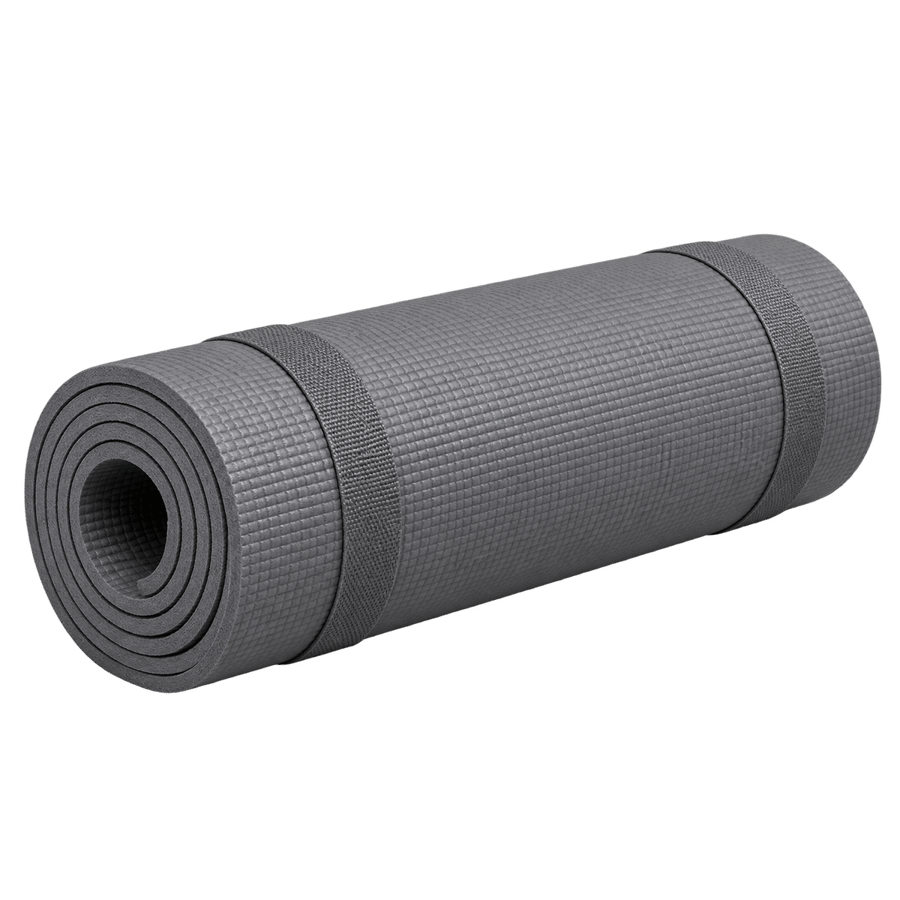
- Stand barefoot on a rug or mat, in comfortable clothes, with a sturdy chair or wall within reach.
- Sit down on the floor without leaning on anything if you can.
- Stand back up the same way.
- Score each half out of 5. Take off 1 point for every support you use (a hand, a forearm, a knee or the side of a leg), and half a point if you wobble or lose your balance.
Add the two halves for a score out of 10. Skip the test if you have a joint injury, recent surgery or get dizzy, and don’t push through pain.
The floor test scores it for you, shows your group in the study and gives you a date to test again.
The simple version
The sitting-rising test is like a driving test that checks steering, brakes, mirrors and judgment in one short loop. It can’t tell you which part failed, but it tells you to look.
What the studies found
The biggest studies of the test come from Claudio Gil Araújo and his colleagues at a private clinic in Rio de Janeiro. In their latest, 4,282 adults aged 46 to 75 took the test and were followed for a median of 12.3 years.
| Score | Share of people | Died during follow-up | Risk against a perfect 10 |
|---|---|---|---|
| 0 to 4 | 11% | 42% | 3.84 times |
| 4.5 to 7.5 | 29% | 20% | 2.23 times |
| 8 | 28% | 11% | 1.51 times |
| 8.5 to 9.5 | 22% | 7% | 1.25 times |
| 10 | 10% | 4% | the comparison |
The risk figures are adjusted for age, sex, BMI and health conditions. The risk in the two lowest groups was well beyond chance, while the groups scoring 8 to 9.5 were too close to a perfect 10 to call. Only 1 in 10 people scored a perfect 10. For death from heart disease, the lowest group had about 6 times the risk.
An earlier study of 2,002 adults found each 1 point higher on the test went with 21% better survival.
The limits
Most of the people were men who chose to be tested at one clinic, so they were probably healthier and better off than average. The test predicts risk, but nobody has run a trial to show that raising your score adds years. What’s known is that the things that raise it, leg strength and balance, are the same things that prevent falls.
2 sources
- Araujo CG and others, Sitting-rising test scores predict natural and cardiovascular causes of deaths in middle-aged and older men and women, European Journal of Preventive Cardiology, 2025pubmed.ncbi.nlm.nih.gov
- Brito LB and others, Ability to sit and rise from the floor as a predictor of all-cause mortality, European Journal of Preventive Cardiology, 2014pubmed.ncbi.nlm.nih.gov