How do you track your own aging?
On this page
Track a few numbers at three speeds. Every day, your steps and the time you get up. Every week, your resting heart rate, weight and sleep. Every two or three months, your watch’s VO2 max, the floor tests and a week of home blood pressure, with a blood panel every few months. Judge each against your own last few results.
Most people want one number that says how fast they’re aging, and there are plenty of companies happy to sell one. The trouble is that a DNA age, a blood age and a fitness age measure different things, they often disagree, and some of them move more between two tests on the same day than they do in a year.
What we’d do
Pick a short list and keep it for a year. Look at weekly averages and the trend over months, never a single day. Count a change as real when it’s bigger than the test’s own wobble or holds across two tests in a row. Keep the different biological ages apart, and give the free fitness tests the most weight, since they’re the ones you can move in weeks.
If you remember three things
- Use three speeds. Steps and wake time daily, heart rate and weight weekly, fitness, blood pressure and blood every few months.
- Know each test’s wobble. Apple Watch put VO2 max about 6 points below a lab test on average, and DNA age clocks gave results up to 9 years apart on the same sample.
- Never average biological ages. Fitness tests, blood markers and DNA measure different things.
What should you check, and how often?
| Number | How often | Look at | Learn more |
|---|---|---|---|
| Steps | Daily | The weekly average | Do you need 10,000 steps? |
| Wake time | Daily | Within an hour, weekends too | Is eight hours what counts? |
| Resting heart rate and HRV | Every night | The weekly average against your own last month | hrv.guide |
| Weight and waist | Weekly | The trend over a month | bodyfat.guide |
| VO2 max | Every 2 to 3 months | The trend on the same watch | vo2max.guide |
| Floor test, one leg, dead hang | Every 8 weeks | Whether each moved | The floor test |
| Home blood pressure | A week, every few months | The week’s average | bloodpressure.guide |
| Blood panel | Every few months to once a year | A few key markers | Which blood tests count most? |
Typical step goals are 6,000 to 8,000 a day from 60 on and 8,000 to 10,000 before that, the points where the lower death risk leveled off in a pooled study of 47,471 adults. The Gyroscope app personalizes yours.
A picture from daily life
Think of how you watch your money. You glance at your checking account every day, open the statement every month and look at your retirement savings every few months. Judging a retirement fund by one day on the stock market would drive you mad. Your body works the same way. Steps change daily, fitness changes over months, and some blood markers over a year.
How big does a change have to be?
It has to be bigger than the test’s own wobble. Every measurement has some, and the cheaper and more automatic it is, the more it usually has.
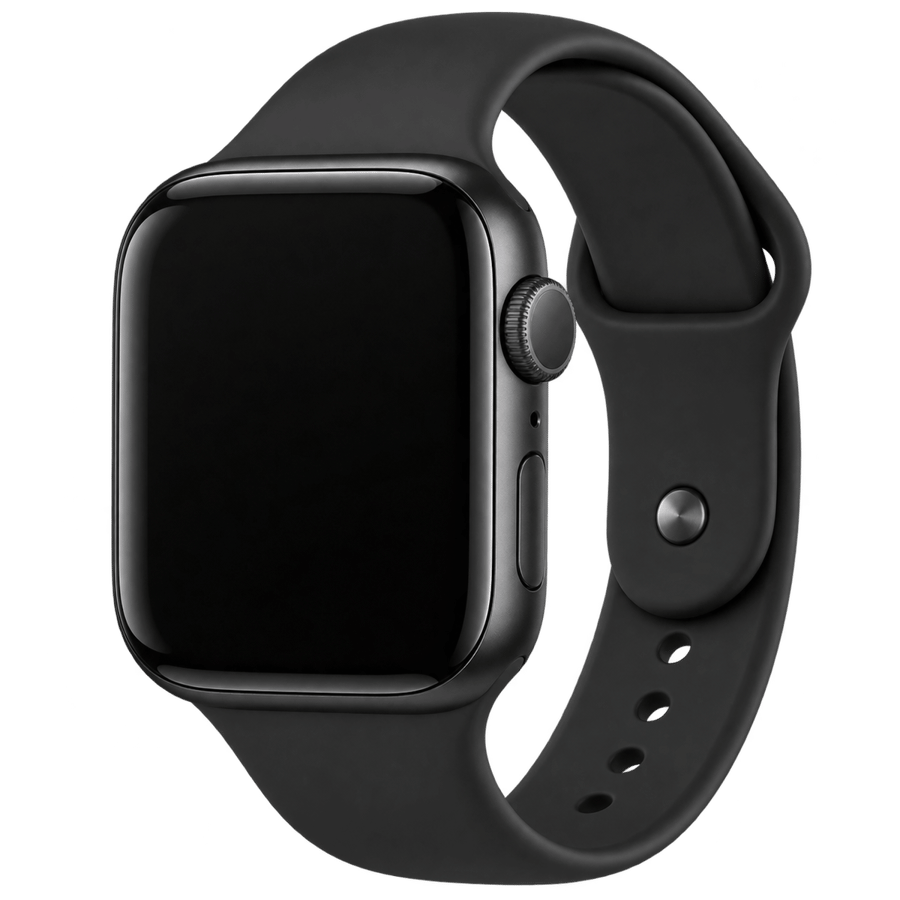
- Watch VO2 max. In 30 people who wore an Apple Watch and then ran a lab treadmill test, the watch came out 6.07 points (ml/kg/min) lower on average. For some people it was close, and for others it was off by as much as about 18 points. That makes it poor as an exact number and useful as a trend on the same watch.
- The floor test. A wobble costs half a point, so a one point change in your score is the smallest that means much. Test on the same floor, barefoot, at a similar time of day.
- The dead hang. Use the same bar and the same grip each time, the way Gyroscope’s benchmark asks.
- Blood pressure. One measurement swings a lot. A week’s average, morning and evening, is what to compare.
- DNA age. When researchers ran the same samples twice through six well known clocks, results came out up to 9 years apart. A retrained version of the same clocks brought most repeat results within 1.5 years of each other.
Count a change as real when it’s bigger than these, or when two tests in a row move the same way.
Why are there three biological ages?
Because “biological age” means three different things.
- A fitness age from tests like VO2 max, the floor test, grip and balance. They’re free or cheap, and several have been followed against who died in big studies. In 122,007 treadmill tests, fitness predicted death as strongly as smoking did.
- A blood age worked out from the results of routine blood tests.
- A DNA age from the chemical tags on your DNA (an epigenetic clock).
They don’t agree with each other. In a 2-year trial where people ate about 12% fewer calories, one DNA clock (DunedinPACE) showed aging 2 to 3% slower, while two others (PhenoAge and GrimAge) showed no change in the same people. Averaging them would hide that and add the noise of each test together. Telomere length, an older idea of a biological clock, has its own twist. People born with genes for longer telomeres had higher rates of several cancers. What is biological age?
Why test at all, if the habits are the same?
The sceptic says
You already know what to do. Testing just adds worry and cost, and the advice won’t change.
The reply
The advice might not change, but your effort will. Seeing the floor test or your hang time move after 8 weeks is a reason to keep going, and these numbers can move fast. Frail nursing home residents aged about 90 raised their leg strength by 174% in 8 weeks of training. A test also tells you which part to work on, since a stiff hip and a weak grip need different training.
Your turn
Take the floor test today and put the retest date in your calendar, or take the two-minute quiz for your own short list.
10 sources
- Paluch AE and others, Daily steps and all-cause mortality: a meta-analysis of 15 international cohorts, Lancet Public Health, 2022pmc.ncbi.nlm.nih.gov
- Windred DP and others, Sleep regularity is a stronger predictor of mortality risk than sleep duration, Sleep, 2024pubmed.ncbi.nlm.nih.gov
- Lambe R and others, Investigating the accuracy of Apple Watch VO2 max measurements: A validation study, PLOS One, 2025pmc.ncbi.nlm.nih.gov
- Mandsager K and others, Association of Cardiorespiratory Fitness With Long-term Mortality Among Adults Undergoing Exercise Treadmill Testing, JAMA Network Open, 2018jamanetwork.com
- Higgins-Chen AT and others, A computational solution for bolstering reliability of epigenetic clocks, Nature Aging, 2022pmc.ncbi.nlm.nih.gov
- Waziry R and others, Effect of long-term caloric restriction on DNA methylation measures of biological aging in healthy adults from the CALERIE trial, Nature Aging, 2023pmc.ncbi.nlm.nih.gov
- Telomeres Mendelian Randomization Collaboration, Association Between Telomere Length and Risk of Cancer and Non-Neoplastic Diseases: A Mendelian Randomization Study, JAMA Oncology, 2017pmc.ncbi.nlm.nih.gov
- Araujo CGS and others, Sitting-rising test scores predict natural and cardiovascular causes of deaths in middle-aged and older men and women, European Journal of Preventive Cardiology, 2025academic.oup.com
- Fiatarone MA and others, High-intensity strength training in nonagenarians. Effects on skeletal muscle, JAMA, 1990pubmed.ncbi.nlm.nih.gov
- Gyroscope, Grip strength and dead hang benchmarkgyrosco.pe