What should you measure first?
On this page
Start with the tests that cost nothing. Sit down on the floor and get up without your hands, stand on one leg for 10 seconds, hang from a bar, and take a week of blood pressure readings at home. Each one predicted death or heart disease in big studies. Then add a VO2 max from your watch and a blood panel.
Most people assume that measuring how you’re aging means a DNA kit, a full body scan or a few hundred dollars for a “biological age” score. The cheap tests have the better record. Researchers did them on thousands of people and then waited years to see who died.
What we’d do
Do the four free tests this week. It takes about 20 minutes, and a pull-up bar is the only kit. Write the numbers down and test again in 8 weeks. Spend money on blood work after that, and on a DNA age test last, if at all.
If you remember three things
- Can you get up off the floor without your hands? In 4,282 adults aged 46 to 75, scores of 0 to 4 out of 10 went with 3.84 times the risk of a natural death of a perfect 10, over a median of 12 years.
- Can you stand on one leg for 10 seconds? One in five people aged 51 to 75 couldn’t, and they had an 84% higher risk of dying over the next 7 years.
- Do you know your blood pressure? Nearly half of US adults have high blood pressure, and about 1 in 5 of them have it under control.
Why start with the free tests?
Because they test the whole body at once. Getting up off the floor without your hands takes leg strength, hip mobility, balance and a body that isn’t too heavy to lift, all in about five seconds. If one of those has slipped, the test finds it. That’s why a movement this simple predicted death over a dozen years.
The expensive tests mostly look at one part, and some of them are noisy. When researchers ran the same blood sample twice through six well known DNA age clocks, the results came out up to 9 years apart.
A picture from daily life
Before a mechanic orders parts, they take the car round the block. How it starts, brakes and turns tells them which part to open up. The floor test is the drive round the block. A blood panel is opening the hood.
How do you do the floor test?
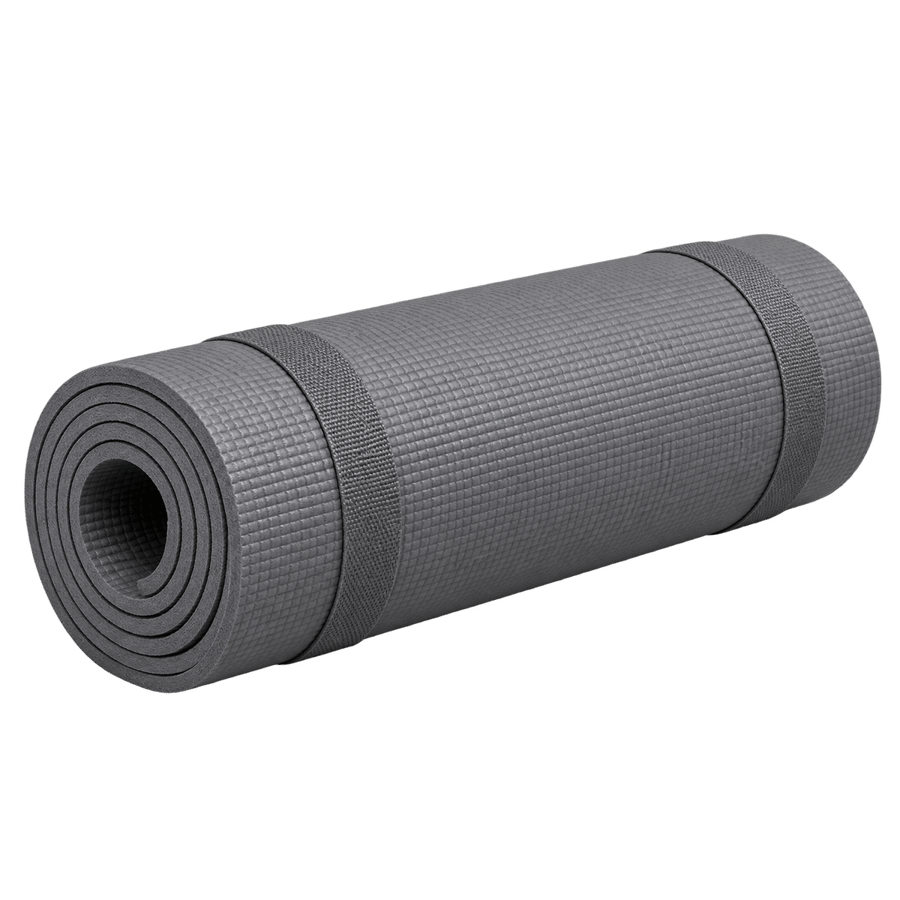
- Stand barefoot on a clear floor, with a sofa or a counter close by in case you need it.
- Lower yourself to sit on the floor without using your hands, forearms, knees or the side of your leg.
- Stand back up the same way.
- Score each half out of 5. Take off a point for each hand, forearm, knee or side of the leg you used, and half a point for a wobble. Add the two halves for a score out of 10.
Researchers led by Claudio Gil Araújo tested 4,282 adults aged 46 to 75 this way and followed them for a median of 12.3 years, in which 665 died. Only about 1 in 10 scored a perfect 10.
| Score | Share of people | Risk of a natural death against a perfect 10 |
|---|---|---|
| 0 to 4 | 10.9% | 3.84 times |
| 4.5 to 7.5 | 29.0% | 2.23 times |
| 8 | 27.7% | 1.51 times |
| 8.5 to 9.5 | 22.2% | 1.25 times |
| 10 | 10.1% | the comparison |
The risks are after allowing for age, sex, weight and health conditions. If you’ve had a hip or knee replaced, a recent fall or a joint that hurts on the floor, skip this one and start with balance.
Can you stand on one leg for 10 seconds?
Stand next to a counter. Lift one foot and rest the front of it against the back of your other calf, arms at your sides, eyes straight ahead. Hold for 10 seconds. You get three tries on either foot.
In a study of 1,702 adults aged 51 to 75, 20.4% couldn’t do it. Over a median of 7 years, 17.5% of them died, against 4.6% of the people who could. After allowing for age, sex, weight and health conditions, not being able to do it went with an 84% higher risk of dying. It gets harder fast after the mid 50s.
Couldn’t hold 10 seconds, by age
- 51 to 555%
- 56 to 608%
- 61 to 6518%
- 66 to 7037%
- 71 to 7554%
How long can you hang from a bar?
Grab a pull-up bar with both hands, lift your feet and time how long you hold on. Nobody has followed hang times to see who dies, so the bands below are Gyroscope’s training bands. The closest study used a grip gauge instead. In 139,691 adults across 17 countries, each 11 pounds (5 kg) of weaker grip went with a 16% higher death rate over 4 years.
Typical bands are under 20 seconds building, 20 to 45 fair, 45 to 60 good and over 60 excellent. The Gyroscope app personalizes yours. Stop if your shoulder hurts or feels loose.
What about push-ups?
They’re a good test if you can do them. In 1,104 male firefighters with an average age of 40, men who could do more than 40 push-ups had 96% fewer heart and blood vessel events (cardiovascular disease) over 10 years than men who managed fewer than 10. It was a small study, with only 37 heart events, all in active men, so use it as a guide for yourself rather than a cut-off for everyone.
A week of home blood pressure
Nearly half of US adults (48.1%, about 120 million) have high blood pressure, and only 22.5% of them have it under control. At 40 to 69, each 20 points (mmHg) higher systolic (the top number) went with more than twice the death rate from stroke and twice the rate from coronary heart disease, in a million adults.
One measurement in a clinic tells you little, because blood pressure moves through the day. A week of measurements at home, morning and evening, tells you a lot. bloodpressure.guide has the seven-day home week, step by step.
Your waist
Wrap a tape round your bare waist at the navel. In the Harvard study a BMI of 25 to 30 carried only about 5% more risk than 23 to 25, while 30 to 35 carried 25% more and 35 and over 67% more. Weight alone misses where the fat sits. bodyfat.guide covers how to tell if you have visceral fat.
Then the ones that cost money
- A VO2 max from your watch. In 122,007 people who ran a treadmill test, the least fit quarter died at about 5 times the rate of the fittest 2 percent. Watches aren’t exact. In a study of 30 people, Apple Watch came out on average about 6 points (ml/kg/min) below a lab test, so use it to watch the trend. vo2max.guide covers the fitness number in full.
- A blood panel. A few markers do most of the work. Start with the blood tests that count most.
- A DNA age test, last. They disagree with each other and move between retests. Are biological age tests accurate?
| Test | Time | What you need | What it was tied to |
|---|---|---|---|
| Floor test | 1 minute | A clear floor | 3.84 times the natural death risk at 0 to 4 |
| One leg, 10 seconds | 1 minute | A counter nearby | 84% higher death risk if you can’t |
| Dead hang | 2 minutes | A pull-up bar | Grip: 16% higher death rate per 11 pounds weaker |
| Push-ups | 2 minutes | A floor | 96% fewer heart events at over 40, in firefighters |
| Home blood pressure | A week | A cuff | Twice the coronary death rate per 20 points |
| Watch VO2 max | Automatic | A watch | 5 times the death rate, least fit against fittest |
Your turn
Take the floor test. It scores your sit-rise, balance and hang against the studies and gives you a date to test again.
12 sources
- Araujo CGS and others, Sitting-rising test scores predict natural and cardiovascular causes of deaths in middle-aged and older men and women, European Journal of Preventive Cardiology, 2025academic.oup.com
- Araujo CG and others, Successful 10-second one-legged stance performance predicts survival in middle-aged and older individuals, British Journal of Sports Medicine, 2022pubmed.ncbi.nlm.nih.gov
- University of Eastern Finland, Inability to stand on one leg for 10 seconds in mid to later life linked to near doubling in risk of death, 2022uef.fi
- Gyroscope, Grip strength and dead hang benchmarkgyrosco.pe
- Leong DP and others, Prognostic value of grip strength: findings from the Prospective Urban Rural Epidemiology (PURE) study, Lancet, 2015pubmed.ncbi.nlm.nih.gov
- Yang J and others, Association Between Push-up Exercise Capacity and Future Cardiovascular Events Among Active Adult Men, JAMA Network Open, 2019pmc.ncbi.nlm.nih.gov
- Centers for Disease Control and Prevention, High Blood Pressure Factscdc.gov
- Lewington S and others, Age-specific relevance of usual blood pressure to vascular mortality: a meta-analysis of individual data for one million adults in 61 prospective studies, Lancet, 2002pubmed.ncbi.nlm.nih.gov
- Li Y and others, Impact of Healthy Lifestyle Factors on Life Expectancies in the US Population, Circulation, 2018pmc.ncbi.nlm.nih.gov
- Mandsager K and others, Association of Cardiorespiratory Fitness With Long-term Mortality Among Adults Undergoing Exercise Treadmill Testing, JAMA Network Open, 2018jamanetwork.com
- Lambe R and others, Investigating the accuracy of Apple Watch VO2 max measurements: A validation study, PLOS One, 2025pmc.ncbi.nlm.nih.gov
- Higgins-Chen AT and others, A computational solution for bolstering reliability of epigenetic clocks, Nature Aging, 2022pmc.ncbi.nlm.nih.gov